Packing for Sri Lanka sounds like a breeze until you realise you are balancing 30°C humidity with the strict modesty requirements of ancient temples.
One minute you’re on a sun-drenched beach in southern Galle, and a few hours later, you’re shivering in the mist-covered tea hills of Nuwara Eliya. It is a lot to coordinate.
At Lanka Safe Tours, we’ve spent over 11 years guiding travellers through every corner of this island. We’ve seen it all—from the traveller who brought only heavy denim (a sweaty mistake) to the one who forgot that shoulders must be covered to enter sacred sites.
We’re writing this guide to save you from those “I have nothing to wear” moments.
By the time you finish reading, you’ll know exactly what to pack for Sri Lanka to stay cool, look respectful, and feel comfortable, whether you’re climbing Sigiriya or sipping Ceylon tea.
Province-by-Province Clothing Guide
Since we’ve navigated these routes countless times, we’ve put together this quick cheat sheet to help you match your outfit to the province you’re visiting.
| Province | Major Hubs | Climate Vibe | What to Wear |
| Western | Colombo, Negombo | Humid & Urban | Smart-casual, light cottons, and breathable city wear. |
| Central | Kandy, Nuwara Eliya | Cool & Misty | Hoodies or light jackets for evenings; very modest for temples. |
| Southern | Galle, Mirissa, Yala | Tropical & Coastal | Breezy linen, swimwear (beaches only), and sun hats. |
| Northern | Jaffna, Mannar | Hot & Traditional | Conservative clothing; long skirts or trousers are best. |
| Eastern | Trincomalee, Arugam Bay | Hot & Surf-heavy | Board shorts and bikinis for surf; modest cover-ups for town. |
| North Central | Anuradhapura, Sigiriya | Hot & Dry | White clothing for temples; sturdy walking shoes for ruins. |
| Uva | Ella, Haputale | Fresh & Hilly | Hiking boots, moisture-wicking gear, and a warm fleece. |
| Sabaragamuwa | Ratnapura, Belihuloya | Rainy & Lush | Waterproof raincoat and quick-dry fabrics. |
| North Western | Kurunegala, Kalpitiya | Tropical & Humid | Light-colored clothes and high-SPF sun protection. |
“What do people wear in Sri Lanka?”
The most common question we get is, “What do people wear in Sri Lanka on a daily basis?”
Generally, the locals dress modestly but practically. Because of the heat, natural fabrics are your best friends. Linen, organic cotton, and bamboo fabrics are lifesavers here. Synthetic materials like polyester will make you feel like you’re wearing a plastic bag within ten minutes of stepping outside.
The Sri Lankan dress style is a mix of traditional and modern.
In cities like Colombo, you’ll see plenty of jeans and office wear, but as soon as you head into the rural areas, the traditional sarong (for men) and saree or modest skirts (for women) become more common.
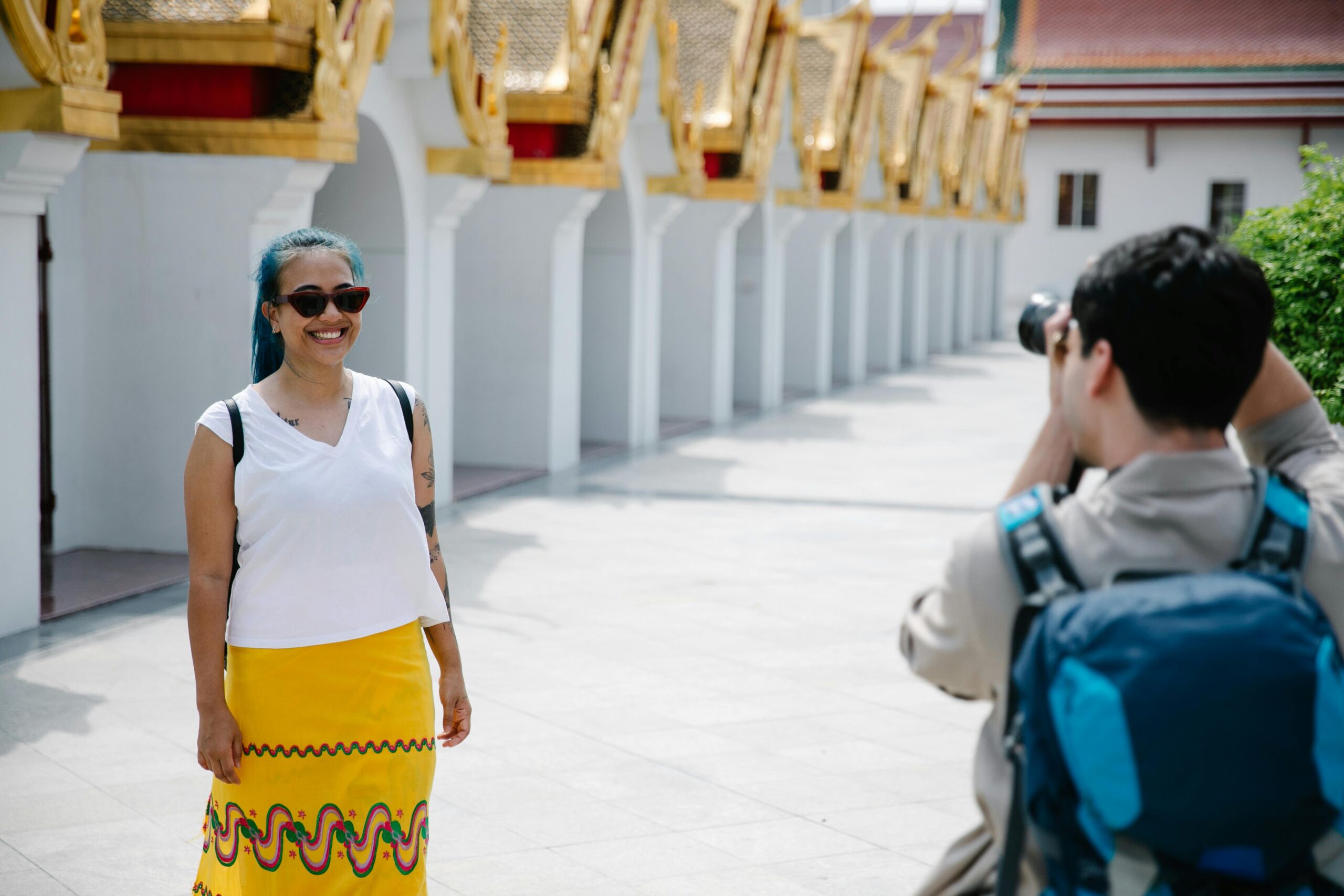
For you, the goal is “conservative chic.” Think loose trousers, long skirts, and t-shirts that cover the shoulders.
Understanding the Temple Dress Code for Sri Lanka
This is the one area where you cannot wing it.
Sri Lanka is a deeply spiritual country with a majority Buddhist population, and religious sites are treated with the utmost respect. If you aren’t dressed correctly, you will be turned away at the entrance—no exceptions.
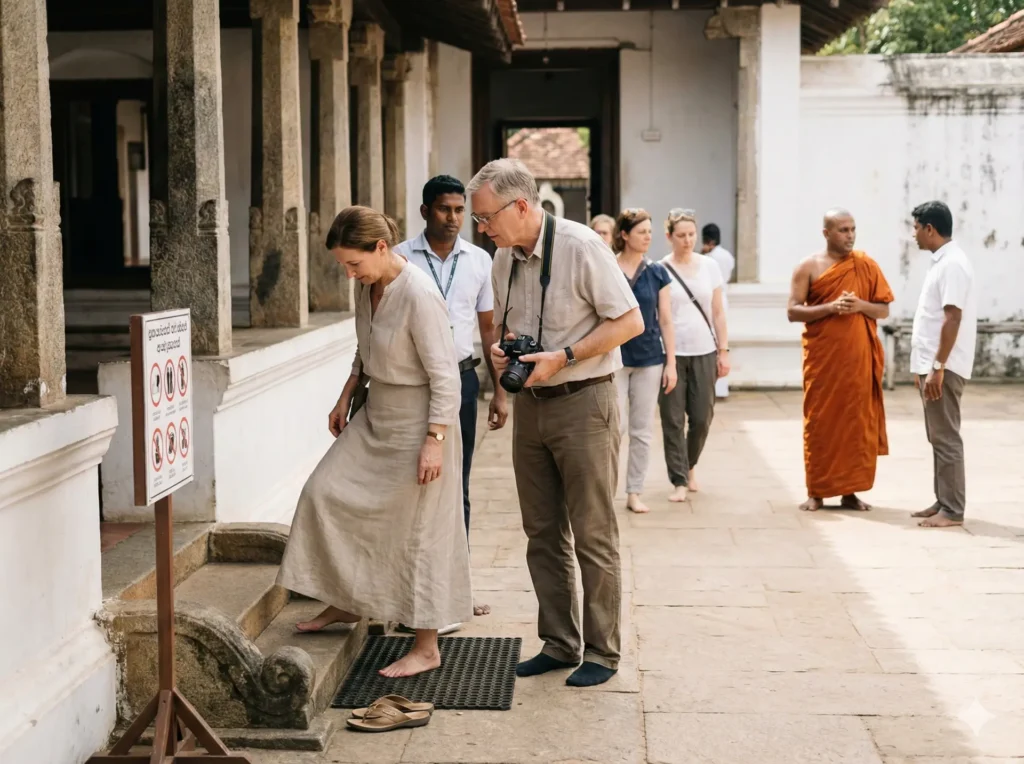
When visiting any temple or sacred site, both men and women must cover their shoulders and knees.
- The Sarong Hack: Always carry a lightweight sarong or a large scarf in your day bag. You can quickly wrap it over your shorts or around your shoulders when you reach a temple entrance.
- The “White” Tradition: You’ll notice locals wearing white to temples. While not mandatory for tourists, wearing white or light colours is a beautiful way to show respect and stay cool under the sun.
- Remove Your Shoes: You must take off your shoes before entering the temple grounds. But here is a pro-tip: the stone floors can get scorching hot by noon. Wear a pair of socks in your bag so you can walk across the courtyards without burning your soles.
What to Wear in Sri Lanka: Women’s Edition
If you are looking specifically for what to wear in Sri Lanka for women, you need to consider both the heat and the culture.
In beach towns like Hikkaduwa, Mirissa, or Arugam Bay, bikinis and summer dresses are perfectly fine. But as soon as you leave the sand and head into the village or a local shop, it’s polite to throw on a cover-up.
Walking around a local town in just a bikini top or very short “cheeky” shorts will draw unwanted attention and is generally considered disrespectful to the local community.
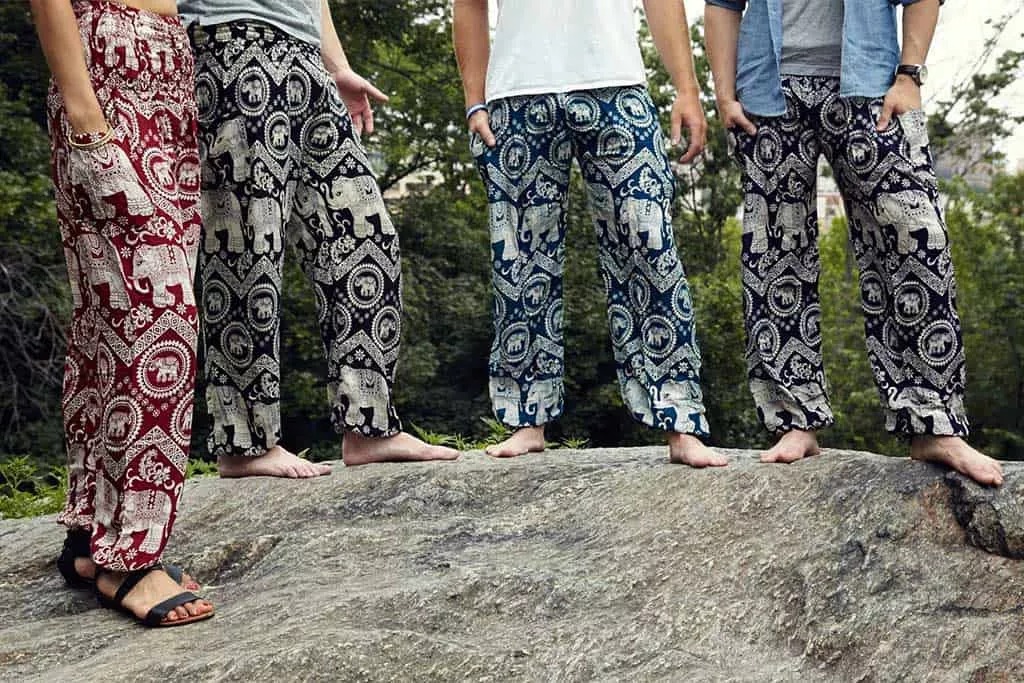
Loose-fitting “elephant pants” are a cliché for a reason—they are incredibly comfortable and culturally appropriate everywhere. Maxi dresses are also a fantastic option because they allow for airflow while keeping you covered.
And don’t forget a sturdy sports bra if you’re planning on any trekking or bumpy jeep safaris. Those dirt roads in Yala National Park are no joke.
What Do Men Wear in Sri Lanka?
For the guys, it’s pretty straightforward. T-shirts and shorts are the standard for daily travel. However, avoid “singlets” or sleeveless gym shirts when you’re in the city or near religious sites.
If you want to blend in and try something local, buy a sarong. It’s the ultimate air-conditioned clothing for men.
Just make sure you learn how to tie it properly so it doesn’t fall off while you’re walking!
For dinner at nicer hotels or colonial-era clubs, a linen button-down shirt and chinos will serve you well.
Essential Footwear: More Than Just Flip-Flops
While you will spend 80% of your time in sandals, your Sri Lanka tours will likely involve some walking. If you’re climbing Adam’s Peak or hiking through Horton Plains, you need real shoes.
- Walking Shoes/Trainers: Necessary for Sigiriya Rock or wandering through tea plantations where leeches might be present (especially after rain).
- Water Shoes: Useful if you’re heading to rocky beach areas or planning on doing some river activities.
The “Everything Else” Checklist
Beyond just clothes, your what to pack for Sri Lanka list should include a few practical items that make life easier:
- Sunscreen: It is expensive and sometimes hard to find high SPF brands locally. Bring plenty from home.
- Insect Repellent: Essential for the evenings, especially if you are near water or in the jungle.
- A Power Bank: Between taking photos of the iconic blue train and using GPS, your phone battery will drain fast.
- A Small Backpack: For your water, sarong, and camera.
While you’re out exploring, knowing a few local words goes a long way. Check out our guide on how to say hello and other useful phrases in Sri Lanka to help you connect with the people you meet along the way.
Ready to Explore the Teardrop Island?
Packing for a trip should be the start of your excitement, not a source of stress. Sri Lanka is an incredibly welcoming place, and as long as you pack a bit of respect for the local culture and a lot of respect for the tropical sun, you are going to have the time of your life. The beauty of this country lies in its variety—the vibrant colours of the sarees, the deep green of the tea estates, and the golden hues of the coast.
If you’re feeling overwhelmed by the logistics of planning your route or figuring out the best way to get between these different climates, that is exactly where we come in.
At Lanka Safe Tours, we are more than just a travel agency; we are a Sri Lanka Tourist Board-approved team with over a decade of experience. We specialise in creating seamless, private Sri Lanka tours that prioritise your comfort and safety. Whether you want to explore the island on a cycling tour, see the sights from a hot air balloon, or simply have a reliable private chauffeur to guide you through the popular routes, we’ve got you covered.
Our goal is to give you a first-class experience at an unbeatable rate, ensuring you leave with memories that last a lifetime. If you’re ready to start planning your perfect getaway, reach out to us. We’d be honoured to show you our beautiful nation!