If you’ve spent any time researching things to do on Sri Lanka’s east coast, you’ve probably run into a dozen different opinions on when and where to see whales. Some sites say May, others say August, and half of them are just recycling the same paragraph. That’s the problem with a lot of whale watching advice online — it’s written by people who’ve never actually stood on a boat off Trincomalee at 6 a.m., squinting at the horizon.
We have. Over the years, we’ve put together countless east coast itineraries for travellers who came to Sri Lanka specifically for this — to see a blue whale surface a few hundred metres away, or watch a pod of sperm whales take their long dive down.
So this isn’t a copy-paste guide. It’s what we tell our own guests before they head out to sea: when to go, what to expect, what to pack, and what genuinely makes Trincomalee different from Mirissa on the south coast.
By the end of this, you’ll know exactly what kind of trip to plan and roughly when to book it.
Why Trincomalee, and not just Mirissa
Most people planning a Sri Lanka whale watching trip default to Mirissa, mainly because it’s the name that comes up first in search results.
Fair enough — it’s a solid choice. But Trincomalee holds its own, and in a few ways, it’s the better pick.
Trincomalee sits on one of the deepest natural harbours in the world, and that matters more than it sounds like it should.
Deep water close to shore means whales don’t have to travel far offshore to find food, which means shorter boat rides for you and less time bouncing around on open water. Blue whales and sperm whales both use these waters, often within 6 to 8 nautical miles of the coast — about half an hour out by boat on a good day. Compare that to some of the longer runs you’ll find elsewhere, and it’s a meaningful difference, especially if you get seasick easily.
There’s also the sperm whale factor. Trincomalee has a bit of a reputation for pods — sometimes fairly large ones — that Mirissa doesn’t see nearly as often. If watching a sperm whale lift its tail fluke before a deep dive is on your list, this coast gives you a genuinely good shot at it.
Blue whale season Sri Lanka: when Trincomalee actually peaks
Here’s where the confusion usually starts.
Trincomalee’s whale watching season generally runs from around March through September, with the most reliable window falling between May and August. The northeast monsoon (roughly October to April) is what shuts things down — rough seas, poor visibility, and most operators simply won’t run trips.
If blue whales are the main draw for you, aim for May through July. That’s when sightings tend to be strongest, and it lines up neatly with the tail end of Mirissa’s season winding down — which is actually a nice bit of scheduling if you’re doing a longer Sri Lanka trip and want a shot at both coasts.
Sperm whales don’t follow quite the same calendar. They show up throughout the Trincomalee season, though many operators find June through August particularly good for spotting pods rather than lone individuals.
One honest note: nobody can promise a sighting. Any operator who guarantees whales every single trip is either exaggerating or hasn’t been doing this long enough to know better. What we can tell you is that Trincomalee’s strike rate during peak months is genuinely good — this isn’t a long shot, it’s a well-timed bet.
Best whale watching Sri Lanka spots around Trinco
Trincomalee Harbour
This is where nearly every whale watching tour begins.
Boats typically leave between 6 and 7 a.m., which sounds early until you realise it’s the best time to be out there — the sea is calmer before the wind picks up, and whales tend to surface more actively earlier in the day. The harbour itself is one of the deepest natural harbours in the world, which is part of the reason whales don’t have to travel far offshore to find food. For you, that translates into a shorter ride out and more time actually watching rather than travelling.
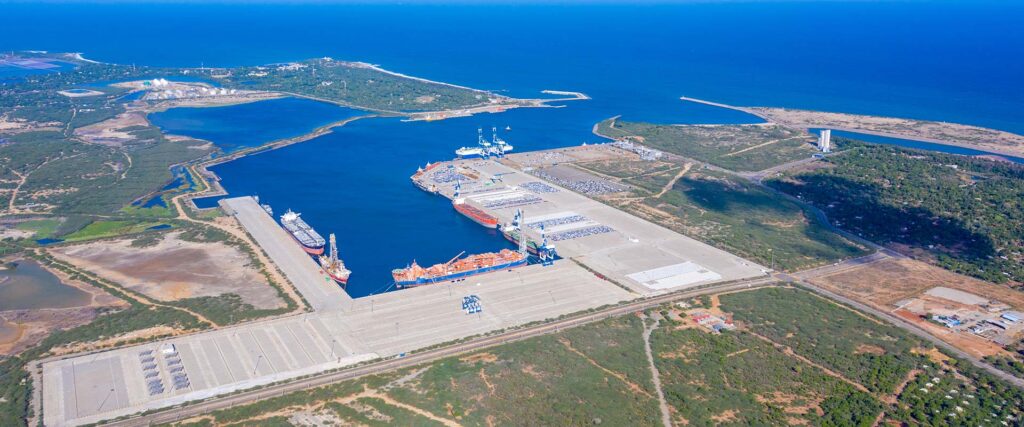
Bay of Trincomalee’s harbour is renowned for its large size and security
Swami Rock (Koneswaram Temple)
Perched on a cliff above the harbour, Swami Rock is home to the Koneswaram Temple and doubles as one of the few places on earth where you can spot blue whales from dry land.
It won’t replace the experience of being out on the water, but during peak season, on a clear morning, it’s genuinely possible to see a whale surface from up here. If you’re visiting the temple anyway for its history and the views over the bay, it’s worth pausing at the edge for a few minutes and watching the water.
The offshore waters, 6–8 nautical miles east
This is where the actual sightings happen. Most tours travel about half an hour out from the harbour to reach these waters, where blue whales and sperm whales are most consistently encountered during the season. The relatively short distance is one of Trincomalee’s real advantages — some whale watching destinations require an hour or more each way, which eats into your time and, for some people, their patience with rougher seas.
Nilaveli
A short drive north of Trincomalee town, Nilaveli is a quieter coastal stretch that a lot of travellers use as their base for a whale watching trip. It has a slower pace than the town itself, with long, largely uncrowded beaches, and it works well if you’d rather unwind by the sea in the afternoons after an early boat trip than spend your stay in a busier part of town.
Pigeon Island National Park
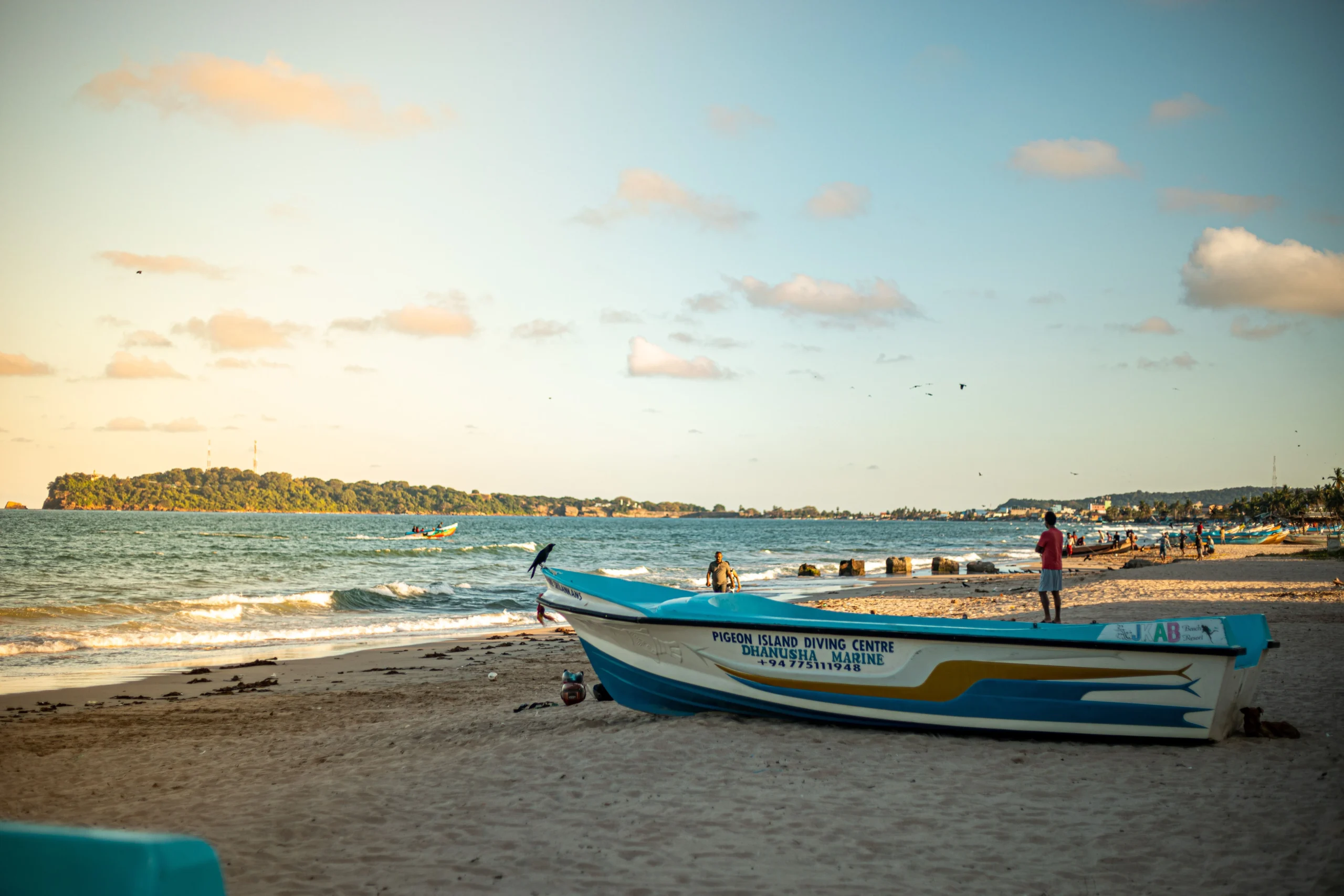
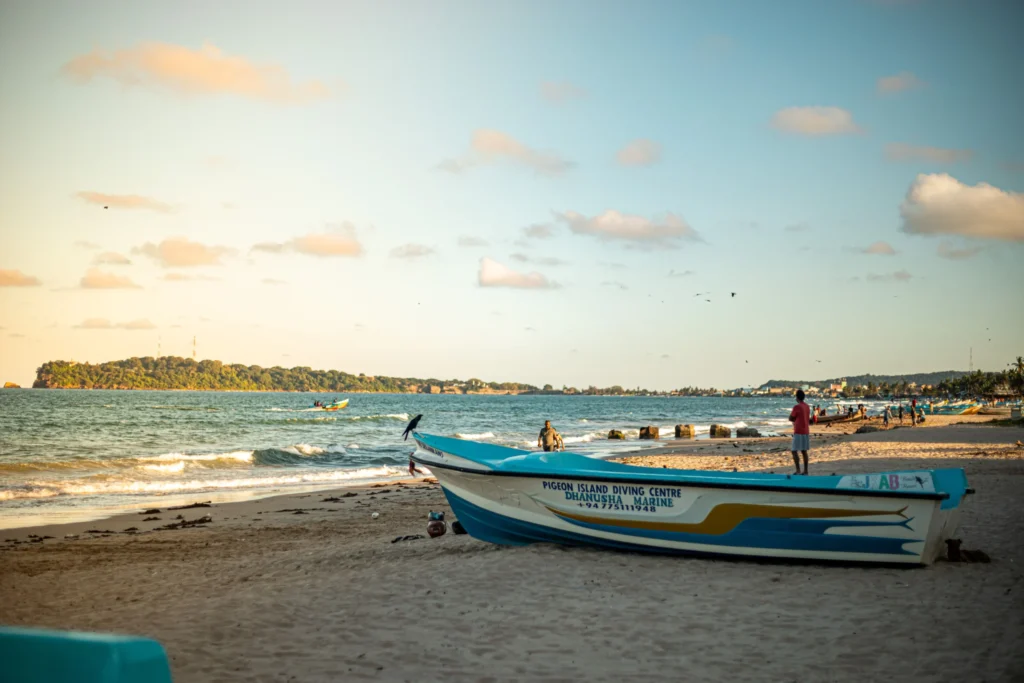
Not a whale watching location itself, but worth knowing about if you’re planning your days around Trincomalee. It’s a short boat ride from Nilaveli and known for its coral reefs and snorkelling, and quite a few visitors pair an early morning whale watching trip with an afternoon here — one ocean experience in the morning, a completely different one after lunch.
What to wear and pack — the short version
People overthink this. You’re not going hiking, you’re sitting on a boat for a few hours. Here’s what actually matters:
Wear something light and breathable, and bring a layer — mornings on open water can be cooler than you’d expect, even in a tropical climate. A cap or hat that won’t blow off is more useful than you’d think, and sunglasses are non-negotiable; the glare off the water by mid-morning is intense. Sunscreen too, reapplied if the trip runs long, because the combination of sun and sea breeze tricks people into thinking they’re not burning.
Bring motion sickness tablets if you’re at all prone to it, and take them before boarding, not after you start feeling off. A dry bag or waterproof pouch for your phone and camera is a small thing that saves a lot of regret. And pack a bottle of water — some boats provide refreshments, but don’t count on it.
Comfortable, closed shoes with grip are better than sandals, since boat decks get slippery. Beyond that, travel light. You want your hands free for photos, not juggling bags.
Choosing the right tour
Not every whale watching operator in Trincomalee runs things the same way. Boat size matters — smaller boats get closer and feel more personal, but they also rock more; larger vessels are steadier but keep you at a slightly greater distance. Ask about group size before booking, and check whether the operator follows responsible whale watching guidelines, keeping a respectful distance and not chasing or crowding the animals. A rushed, overcrowded boat is a worse experience than a slightly quieter one with a guide who actually knows the waters.
A trip worth timing right
Whale watching isn’t something you can force into a schedule the way you can a museum visit or a city tour — the ocean sets the terms, not the calendar on your phone. But get the timing right, dress sensibly, and pick an operator who knows these waters, and Trincomalee delivers one of the more memorable mornings you’ll spend in Sri Lanka. There’s something genuinely humbling about watching a blue whale, the largest animal to have ever lived, surface a few hundred metres from your boat. Photos never quite capture it.
At The Lanka Safe Tours, we’ve spent 11 years building sri lanka tour packages around exactly these kinds of moments — timed right, planned around real conditions, not guesswork. If a Trincomalee whale watching trip is on your list, we can build it into a wider east coast itinerary, with your own private chauffeur and a pace that actually suits your travel style.
Have a look at our East Coast itineraries or our 10-day East Coast itinerary for a sense of how a trip like this can come together — and if you’re weighing up sri lanka tours more broadly, we’re happy to talk through what fits your dates and interests best.