
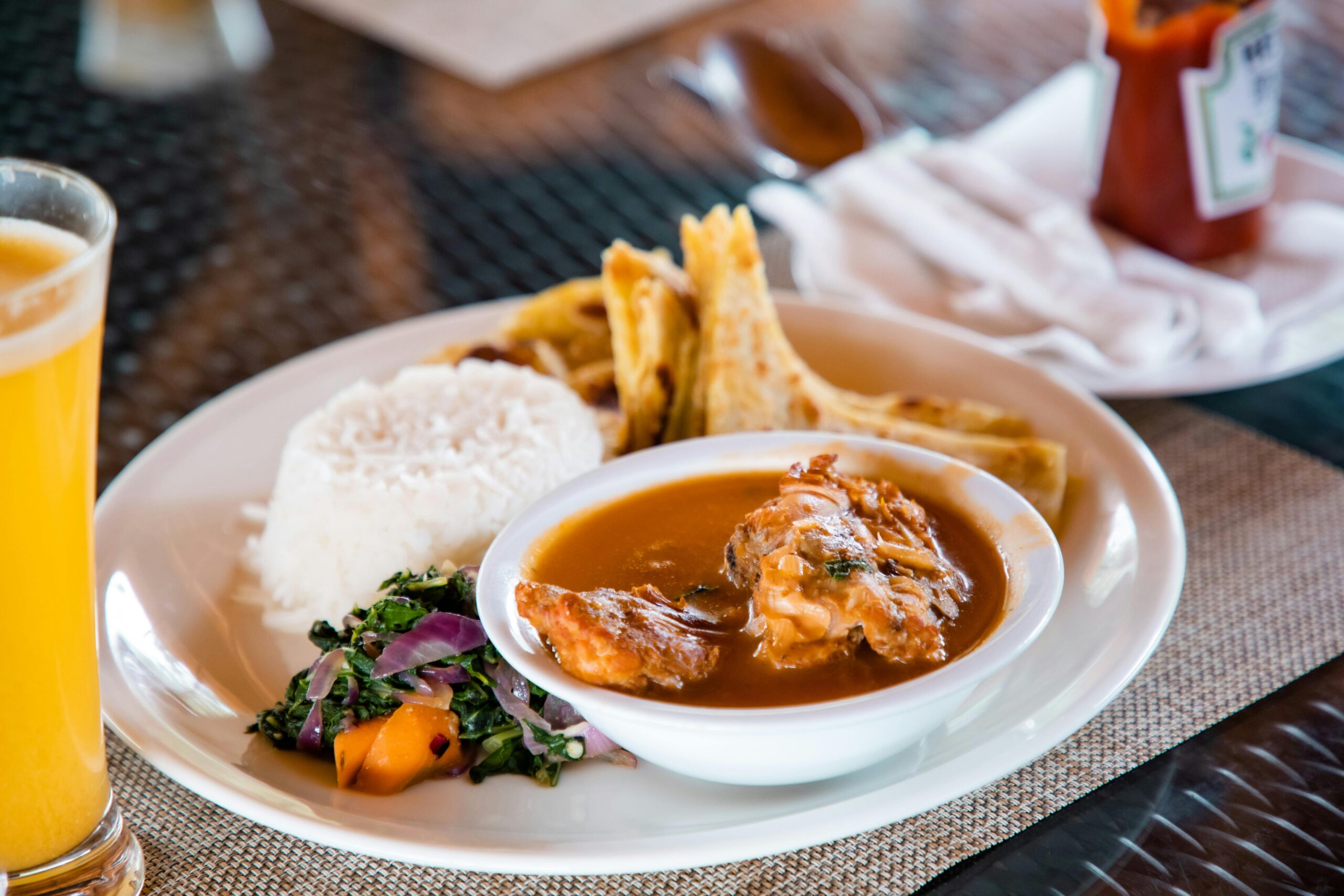
Sri Lanka isn’t just a destination you visit; it’s a place you taste.
From the salt-heavy air of the coast to the tea plantations in the hills, the smell of toasted spices and fresh coconut milk follows you everywhere. If you’re planning a visit, you’ve probably seen the photos of lush greenery and blue waves, but the real heart of the island is found on a plate.
We’ve spent the last 11 years navigating every corner of this country, from the busiest street markets in Colombo to the quietest village kitchens. We’ve seen enough travellers stick to safe hotel buffets to know that many miss out on the soul of our culture.
This guide is here to change that. By the time you finish reading, you’ll know exactly what to look for on a menu, how to eat like a local, and which famous Sri Lankan food items are non-negotiable.
Now you’re about to go from a curious visitor to a culinary insider.
1. Rice and Curry: The National Soul
We can’t talk about Sri Lanka’s famous foods without starting here.
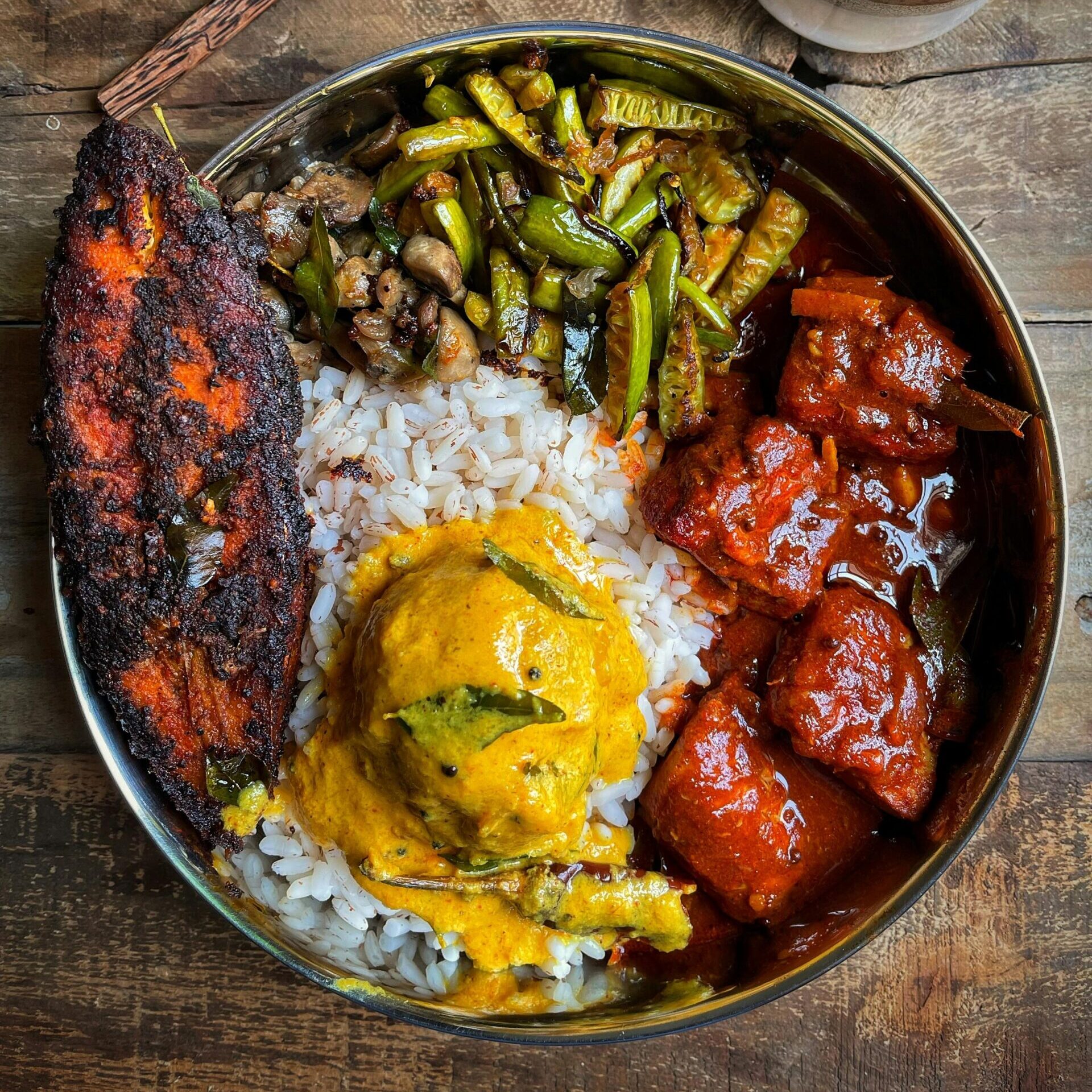
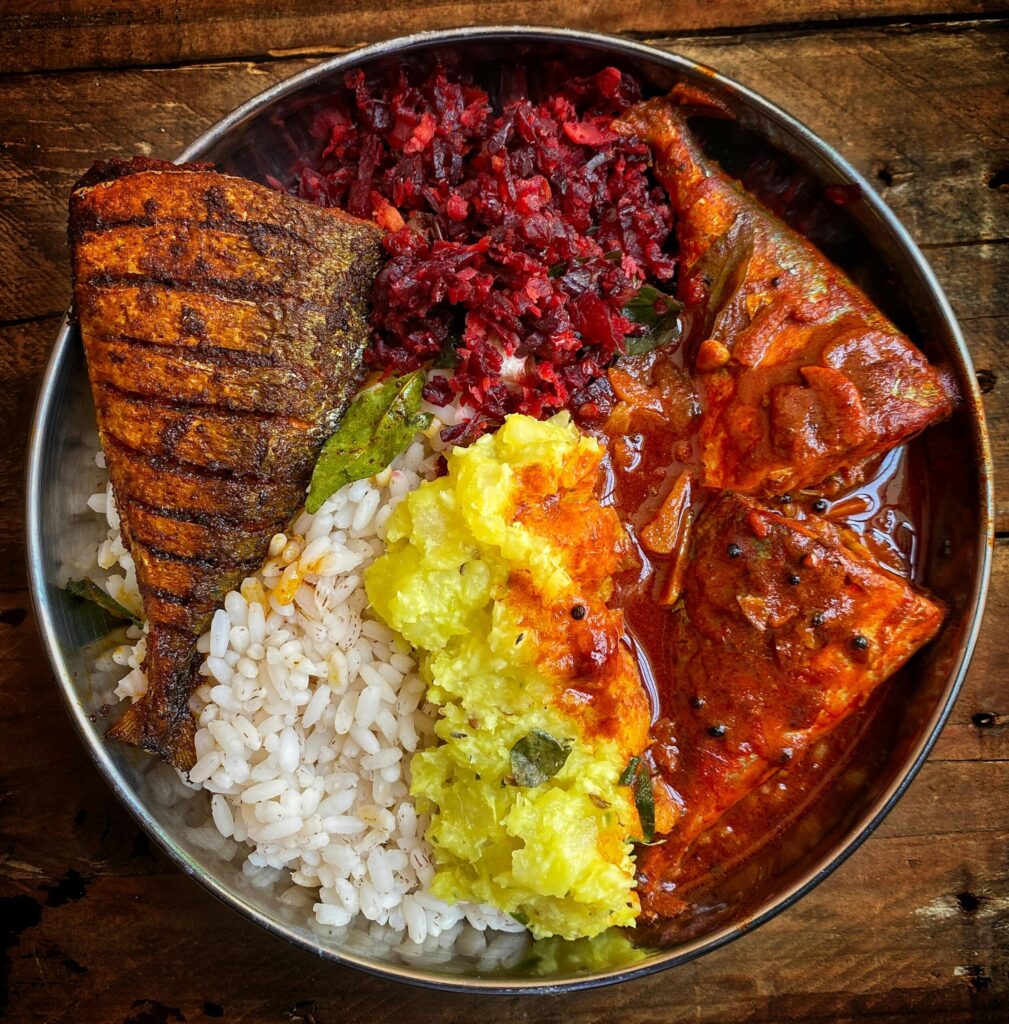
Rice and curry are often called the Sri Lankan national food, but calling it “rice and curry” is a bit of an understatement. It’s actually a feast.
When you order this, you’ll get a large mound of steaming rice surrounded by five or six different bowls. There’s usually a protein—like chicken, fish, or mutton—accompanied by a variety of vegetable curries. The beauty is in the variety. You might get creamy beetroot, spicy beans, or fried eggplant (wambatu moju).
How do you eat it? Use your fingers. It’s the traditional way and, honestly, it makes the food taste better. Mix a bit of the rice with a bit of each curry to get a different flavour in every mouthful.
It’s arguably the best Sri Lankan food experience because no two houses or restaurants make it the same way.
2. Kottu Roti: The Sound of the Night
If you’re walking through a town after sunset and hear a rhythmic “clank-clank-clank,” you’ve found the kottu.
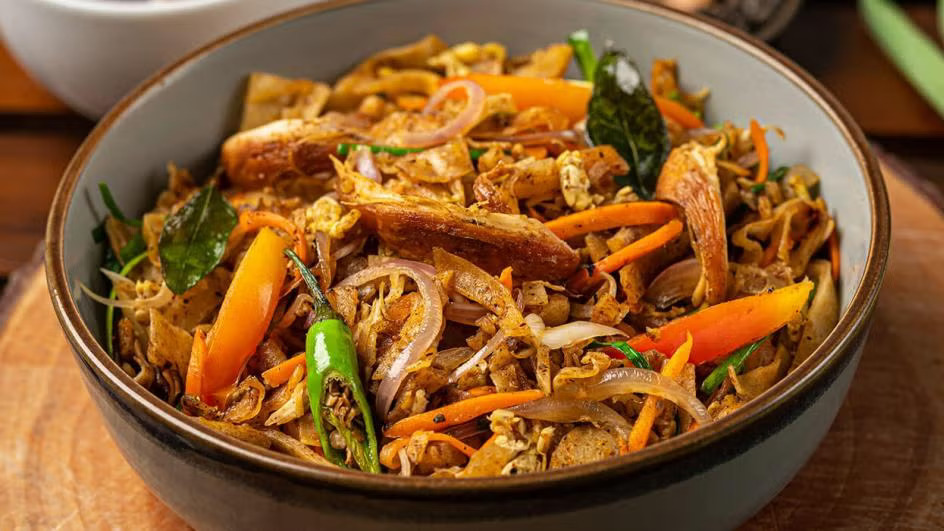
So, what is kottu roti? It’s the ultimate Sri Lankan street food.
It’s made by shredding a flatbread called paratha and tossing it on a hot metal griddle with vegetables, eggs, spices, and your choice of meat.
The chef uses two metal blades to chop and mix everything right in front of you. The sound is iconic. It’s greasy, spicy, and incredibly satisfying.
If you’re worried about whether Sri Lankan food is spicy, kottu is where you’ll find out. You can usually ask the chef to tone it down, but the heat is part of the charm.
3. Hoppers (Appa)
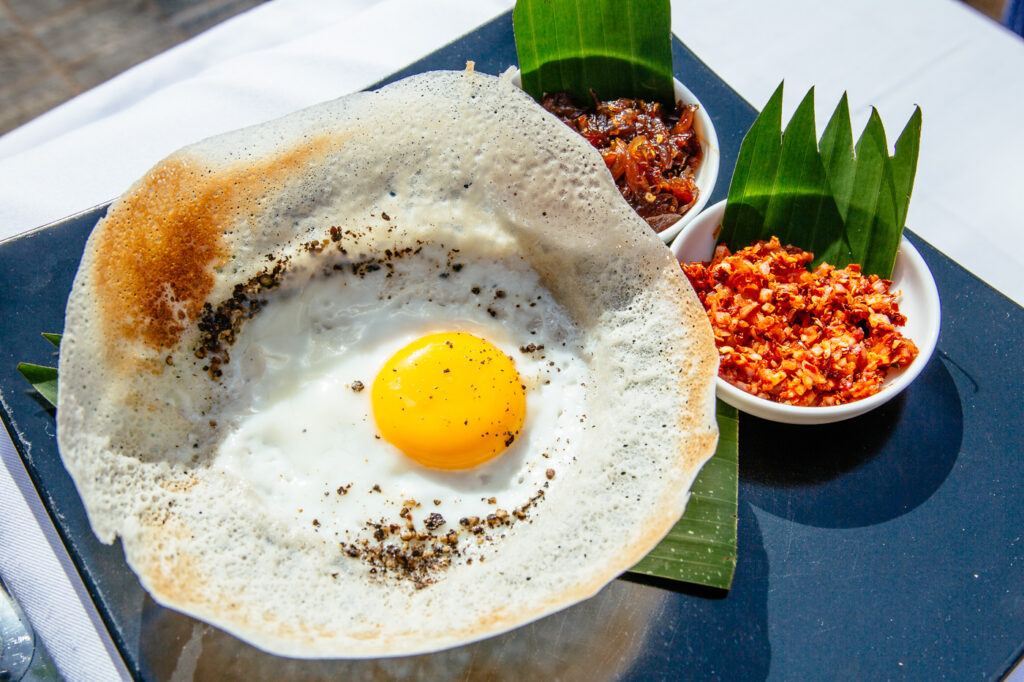
Hoppers are the island’s answer to pancakes, but with a twist.
They are bowl-shaped, made from a fermented batter of rice flour and coconut milk. The edges are thin and crispy, while the centre is soft and doughy.
You’ll see two main types: plain hoppers and egg hoppers.
An egg hopper has a whole egg cracked into the centre while it’s cooking. They are usually served with a spicy onion relish called lunu miris.
It’s a classic breakfast or dinner staple. If you’re in Colombo and planning to visit the Lotus Tower, you’ll find plenty of high-end and street-side spots nearby serving these fresh off the pan.
4. String Hoppers (Idiyappa)
Don’t confuse these with regular hoppers. String hoppers in Sri Lanka are more like nests of thin rice noodles. The flour is pressed through a mould to create small circular mats, which are then steamed.
They are much lighter than regular rice and are almost always served with dhal curry and a generous helping of pol sambol. They soak up the gravy perfectly. Since they are steamed and made from rice flour, they are a great option if you’re looking for something gluten-free or wondering if Sri Lankan food is healthy. (Most of it is, as long as you don’t go overboard on the fried snacks!)
5. Parippu (Dhal Curry)
This is the backbone of almost every meal on the island.
Sri Lankan dhal is different from what you might find in India. We use red lentils and cook them in a rich base of coconut milk, turmeric, curry leaves, and mustard seeds.
It’s creamy, mild, and incredibly comforting. It’s often the first “solid” food Sri Lankan kids eat. You’ll find parippu on a Sri Lankan food list in every single restaurant, from the humblest roadside shack to five-star hotels. It’s the perfect balancer for the more aggressive, spicy meat curries.
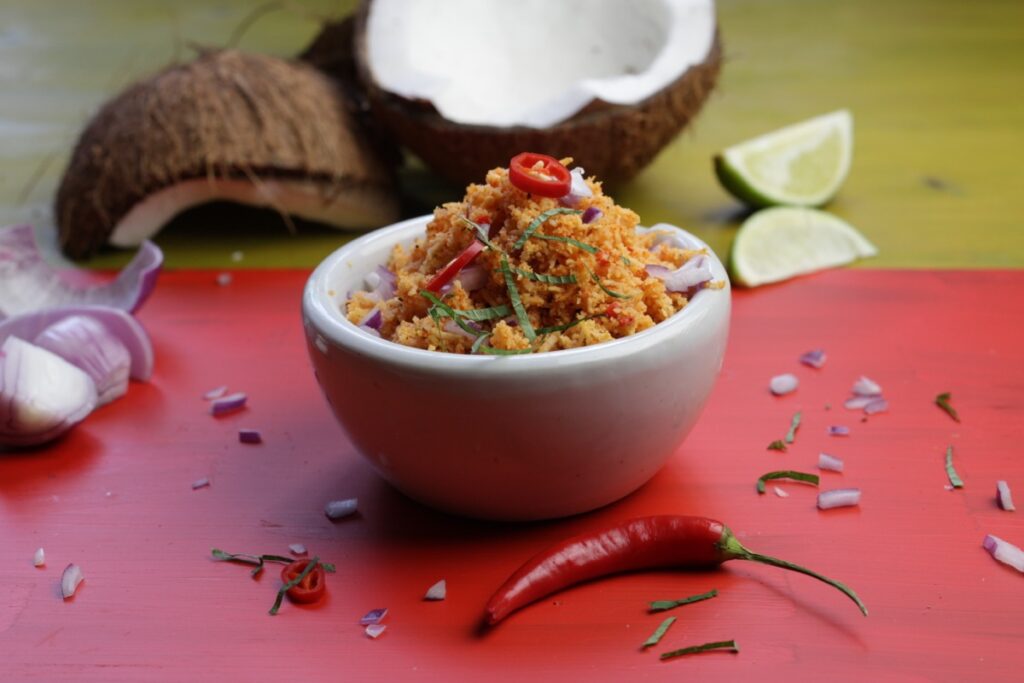
6. Pol Sambol (Coconut Relish)
You can’t leave Sri Lanka without trying pol sambol. In fact, you probably couldn’t avoid it if you tried.
It’s a simple mix of shredded coconut, chilli powder, lime juice, red onions, and a bit of Maldive fish (cured tuna).
It’s bright orange and packed with flavour. It’s used as a condiment for everything—rice, hoppers, bread, or string hoppers. If you’re curious about Sri Lankan food names in English, this is often just called “coconut sambol,” but the Sinhala name is what you’ll hear most. It’s a great way to add a zingy, spicy kick to any meal.
7. Lamprais: A Dutch Legacy
Sri Lanka has a complex history, and lamprais is a delicious reminder of our Dutch Burgher heritage.
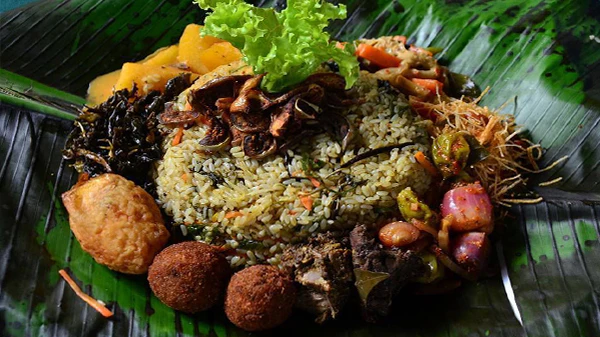
The name comes from the Dutch word lumprijst, which translates roughly to a packet of rice.
But it’s not just any rice. The rice is cooked in meat stock and then wrapped in a banana leaf with a specific set of side dishes: a mixed meat curry (traditionally including beef, pork, and lamb), a frikkadel (Dutch-style meatball), shrimp paste (blachan), and a sweet-and-sour ash plantain curry.
The whole packet is then steamed or baked. The banana leaf infuses the rice with a unique aroma that you just can’t replicate any other way. It’s a labour-intensive dish, so it’s often considered a special treat.
8. Watalappan
After all that spice, you’re going to need dessert. Watalappan is the king of Sri Lankan sweets. It’s a steamed custard made with kithul jaggery (a dark, smoky sugar made from palm sap), coconut milk, eggs, and a heavy dose of spices like cardamom, cloves, and nutmeg.
It’s rich, dark, and has a unique “pitted” texture that sets it apart from smooth Western flans. It’s traditionally prepared by the Sri Lankan Muslim community, especially during festivals, but it’s loved by everyone across the island.
Navigating the Flavours of the Island
Ordering food in a new country can be a bit intimidating, especially when you’re staring at a menu full of Sri Lankan food items with names you can’t quite pronounce. But don’t let that stop you.
Most locals are incredibly proud of their food and will be happy to explain what’s in a dish. If you want to feel a bit more prepared, it’s worth learning how to say hello and other useful phrases before you head out to a local eatery. It goes a long way in making a connection.
Sri Lankan food is an experience that stays with you. It’s bold, it’s colourful, and it’s deeply connected to the land. Whether you’re sitting on a plastic stool by the beach eating kottu or enjoying a formal rice and curry feast in the hills, you’re tasting the history of our island.
At The Lanka Safe Tours, we believe that the best way to see Sri Lanka is through its people and its flavours. As a Sri Lanka Tourist Board-approved agency with over 11 years of experience, we’ve spent a decade refining our Sri Lanka tours to ensure our guests get an authentic experience.
If you’re ready to explore the length and breadth of this beautiful nation, we’d be honoured to show you the way.